



 117
117


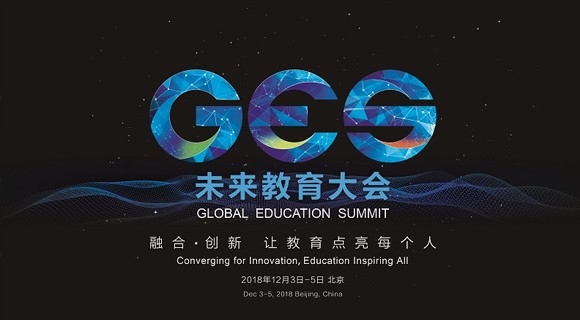
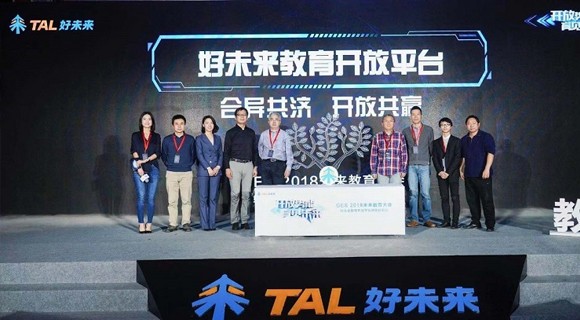
On December 3rd, GES2018 Future Education Conference opened in Beijing. More than 800 leading figures in the global education industry gathered together to explore the forefront trends in global education through cross-regional and cross-cultural exchanges. Bai Yunfeng, co-founder and president of the Good Future Education Group, attended the conference and delivered a keynote speech titled "Exploring Education, We Never Stop".

Bai Yunfeng, co-founder and president of the Good Future Education Group, delivers a keynote speech.
Key Points:
After 40 years of reform and opening up, the development of China's education system reflects the imprint of the times. The changes in the educational needs of China's 1.3 billion population are the most primitive driving force for educational progress. The evolution of China's family education philosophy is the best driving force for promoting educational innovation.
China's rise in knowledge density and knowledge capital is unprecedented in the world. Once their innovative power is unleashed, how will China's economy change? We can imagine.
Teachers need to not only "impart knowledge, teach skills, and dispel doubts," but also need to "inspire, awaken, and encourage." The ultimate goal of education is to nurture children with integrity, kindness, and honesty, and to equip them with the ability to attain happiness.
The Good Future's scientific approach to learning aims to better implement "teaching according to students' aptitude" and "classless education," guiding students to learn scientifically. Good Future empowers education with AI, opening up the black box of the educational process through technology to focus more on the essence and needs of education.
In terms of public welfare, Good Future actively responds to the call of the central government to support targeted poverty alleviation through education, uniting a wider range of industry forces to promote a balanced and inclusive development of education.
Today, less than 1% of the human brain's potential has been developed, and our understanding of the world is also less than 1%. However, our exploration of the future of education has never stopped.
Respected Director Li Wei, Minister Zhu, Principal Dong, Secretary Lu, and all the distinguished guests:
Good morning everyone!
This year marks the 40th anniversary of China's reform and opening up. Over the past 40 years, China has undergone remarkable development, and its education system is no different.
Important Moments in the History of Chinese Education
Here, I would like to review several significant moments in the history of Chinese education with domestic and international guests.
Scene One: Restoration of College Entrance Examination (Gao Kao)
This is the front page of the People's Daily in 1977. That year, after a ten-year hiatus, the college entrance examination system was reinstated. 5.7 million people from factories, rural areas, and the military came to sit in the examination hall with rare opportunities and anxious hearts. Due to the large number of candidates, the state initially struggled to gather enough paper to print the exam papers. The central government then made a decisive decision to allocate paper originally used for printing important government documents to support the college entrance examination. I believe those who lived through that era know what courage it required.
The college entrance examination that year involved 5.7 million participants, but its impact far exceeded these millions of people, playing a significant supportive role in the human resource accumulation and restoration of the college entrance examination system during the 40 years of China's reform and opening up.
Scene Two: Project Hope
This wide-eyed girl is Su Mingjuan, a photograph that moved countless Chinese people to tears, thanks to "Project Hope," which helped impoverished children return to school. Most of the funds for "Project Hope" came from the public. As of 2017, "Project Hope" had received donations totaling 14 billion yuan, providing assistance to 5.75 million students in need and establishing 19,814 Hope Primary Schools.
In fact, during that period, three photos were widely circulated: the "wide-eyed" girl, the "loud voice" boy, and the "shaved head" boy. The "shaved head" boy's family was very poor. When a kind-hearted person saw this photo and gave 300 yuan to the child, he did not accept the money because his parents believed that the child next to him was even more destitute, so they gave the 300 yuan to the other child.
Scene Three: Universal Higher Education
In 1999, after the launch of the "211 Project" in 1995, the "985 Project" in 1998, and the expansion of the college entrance examination in 1999, higher education in China began to become more accessible. At that time, the people were not only concerned about "passing the exam" but also about "passing the exam well," and more and more people started to choose to study abroad for a further education.
The expansion of university enrollments remains a topic of debate among the public. However, in my opinion, the development of education is not for the present, but for the future. By 2030, China's population with higher education will reach 250 million, and they will become the backbone of the society.
At this stage, China's knowledge density and knowledge capital began to rise. Nowhere else in the world has such a large population received higher education. Once their innovative power is unleashed, how will China's economy change? We can imagine.
Today, we are discussing the future of education. What should we consider? This is the significance of the GES Future Education Conference—to cultivate talents with a global vision and competitiveness by connecting Chinese and global education.
The changes in the educational needs of China's 1.3 billion population are the most primitive driving force for educational progress.
Chinese Basic Education—From "Teaching" to "Educating" for the Future
Today in China, we see children paying more attention to comprehensive literacy while focusing on intellectual development. Similarly, children abroad, at the age of 9, are already considering what makes for a happy life.
In the Tang Dynasty, Han Yu once said, "The duty of a teacher is to teach, impart knowledge, and dispel doubts." However, looking at education from the present to the future, we believe that teachers need not only "impart knowledge, teach skills, and dispel doubts," but also need to "inspire, awaken, and encourage." The ultimate goal of education is to nurture children with integrity, kindness, and honesty, and to equip them with the ability to attain happiness. The evolution of Chinese family education philosophy is the best driving force for promoting educational innovation.
Exploring "AI+ Education"—From Scientific Learning Research to Guiding Students to Learn Scientifically
In the era where technological development empowers every industry, we cannot overlook the significance of technology empowering education while staying true to the essence of education within technological development.
Allow me to provide an example. Without affecting the teaching process in public schools, we invisibly collect five sets of data leading to the same learning results. However, does this mean that their learning abilities are not different? While the scores of the five children are the same, through research on the learning process, we found differences in their learning abilities. Similarly, we analyzed two children from Shandong and two from Guangdong. From the assessment of teaching results, their scores were the same, but through analysis of their "six abilities," we discovered significant differences in their learning processes.
Our scientific research on learning aims to better implement "teaching according to students' aptitude" and "classless education." This is what Good Future is doing today. Our goal is to empower education with AI, open the black box of the educational process, and focus more on the essence and needs of education, thus helping students learn scientifically.
Today's Good Future is a technology education company that focuses on intelligent education and open platforms, character education, and extracurricular tutoring, serving public and private education globally, exploring new models for the future of education. By the efforts of 5,000 engineers and researchers in education and technology, and an investment of over 1 billion dollars in technology and research and development, Good Future has established joint research labs with six top universities globally. Our goal is to drive educational progress through technology.
In the past, Good Future has been continuously exploring education through educational public welfare. From the launch of the "Same Class" rural support project to date, Good Future has gathered 342 volunteers, 1,300 teachers, providing a total of 181,944 hours of volunteer service, walking 49,847 kilometers to support 38 impoverished schools in 11 provinces and cities. The "Hope Online" platform, launched in 2017, has reached regions such as Jimunai in Xinjiang, Xiongan New Area, Foping in Shaanxi, Wangmo in Guizhou, and Daliangshan in Sichuan, responding to the call of the central government to achieve targeted poverty alleviation in education, unite the broader industry force, and promote balanced and comprehensive development in education.
The ancient Chinese game of Go embodies the wisdom of our ancestors and philosophers, where every piece is equal. Similarly, in the 21st century, we believe every child is unique and deserves respect.
Today, less than 1% of the human brain's potential has been developed, and our understanding of the world is also less than 1%. However, our exploration of the future of education has never stopped.